
The Bluff Technique
Conditions We Help — Myofascial Release for Pain and Restriction

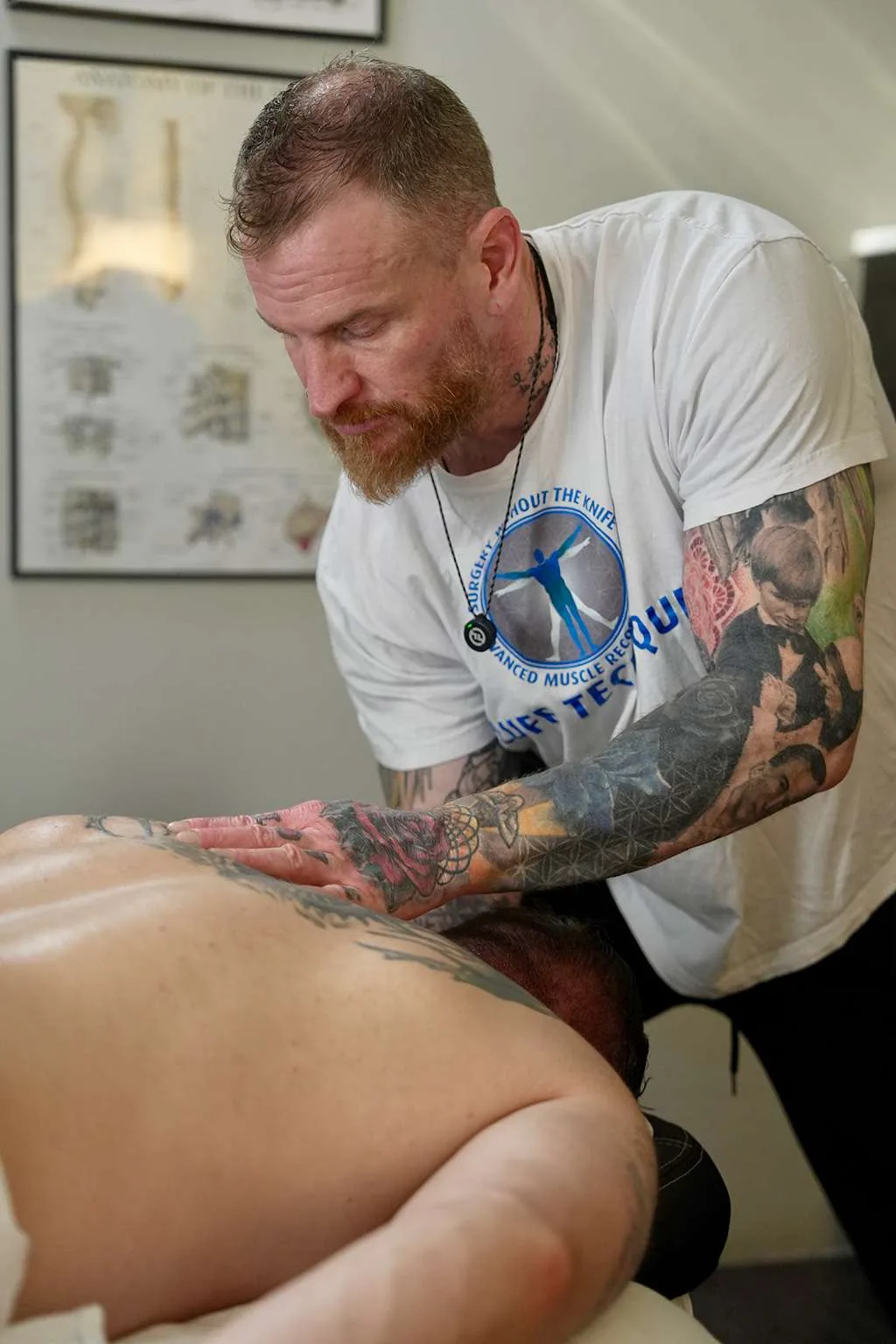
Pain doesn't always start where you feel it. Fascia is a continuous web of connective tissue that wraps muscles, bones, nerves and organs. According to StatPearls (NCBI Bookshelf), fascia "can transmit mechanical tension generated by muscular activity or external forces," and deep fascia contains many sensory nerves. So a restriction in the hip can affect the lower back, and tension in the calf can show up as heel pain. That is why The Bluff Technique™ / AMR™ assesses and treats the whole body, not only the painful spot. To see how sessions work, browse our services.
A note on the evidence: Research on myofascial release ranges from encouraging to inconclusive, depending on the condition. A 2018 systematic review indexed in PubMed found the evidence insufficient for chronic musculoskeletal pain overall. A 2021 meta-analysis in Frontiers in Medicine (Xu et al., 8 randomized trials, 375 participants with chronic low back pain) found significant but modest improvements in pain and physical function. We use measured language on every page and never claim to cure any condition. Our work is meant to complement medical diagnosis and care, not replace it.
Back Pain
According to the National Institute of Arthritis and Musculoskeletal and Skin Diseases (NIAMS), back pain "is one of the most common medical problems in the United States." Our approach looks at the hips, the ribcage, the thoracolumbar fascia and the way you stand and move. A 2021 meta-analysis in Frontiers in Medicine (Xu et al.) pooled 8 randomized trials (375 participants). It found that myofascial release "significantly improved pain and physical function in patients with CLBP" (chronic low back pain), but had no significant effect on balance, trunk mobility, mental health or quality of life.
Learn MoreSciatica
MedlinePlus explains that sciatica "refers to pain, weakness, numbness, or tingling in the leg." It is a symptom, not a condition in its own right. We work with the soft tissue around the pelvis, glutes and back of the leg, and refer clients to a physician whenever nerve symptoms need medical evaluation.
Learn MoreNeck Pain
MedlinePlus notes that "muscle strain or tension often causes neck pain." Desk work, phone use, stress and training loads all contribute. Sessions treat the neck together with the shoulders, upper back, jaw and ribcage.
Learn MoreMigraines and Tension Headaches
The National Institute of Neurological Disorders and Stroke describes headache as "the most common form of pain." A 2024 meta-analysis in PubMed Central found that myofascial release may reduce pain in tension-type and cervicogenic (neck-related) headache. Results for migraine were inconsistent.
Learn MoreTMJ and Jaw Pain
The National Institute of Dental and Craniofacial Research describes temporomandibular disorders as "a group of more than 30 conditions that cause pain and dysfunction in the jaw joint and muscles that control jaw movement." We work gently with the fascia of the jaw, neck and head, often alongside dental care.
Learn MoreFrozen Shoulder
AAOS OrthoInfo explains that frozen shoulder (adhesive capsulitis) "causes pain and stiffness in the shoulder." A systematic review in PubMed Central linked myofascial release to improvements, mainly when it was combined with conventional physiotherapy.
Learn MoreScoliosis
NIAMS describes scoliosis as a sideways curve of the spine. Myofascial work does not straighten the spine. It aims to improve comfort, mobility and balance around the curve, alongside the care your medical team provides.
Learn MoreFibromyalgia
NIAMS describes fibromyalgia as "a chronic (long-lasting) disorder that causes pain and tenderness throughout the body, as well as fatigue and trouble sleeping." The NIH's NCCIH notes that massage may help some fibromyalgia symptoms if it is continued long enough. Our sessions for fibromyalgia are especially gentle and carefully paced.
Learn MorePlantar Fasciitis
Heel and arch pain that is often worst with the first steps of the morning. MedlinePlus lists a tight Achilles tendon and long-distance running among the risk factors, which is why we treat the calf, the Achilles and the back of the leg as well as the foot.
Learn MoreFrequently Asked Questions — Conditions and Myofascial Release
What conditions can myofascial release help with?
Clients most often come to us for back pain, sciatica, neck pain, headaches, TMJ, frozen shoulder, scoliosis-related discomfort, fibromyalgia and plantar fasciitis. The evidence varies by condition. Some, such as tension-type headache, have encouraging meta-analyses, while others haven't been well studied yet. We describe outcomes honestly and never promise a cure.
Do I need a diagnosis before booking?
It isn't required, but we strongly recommend it. A physician can first rule out problems that need medical treatment. If you have numbness, weakness, unexplained weight loss, fever, or pain after an injury, please see a doctor before booking.
Why do you treat areas other than where I feel pain?
Fascia is continuous and carries tension throughout the body, so a restriction in one area can change the load on another. Whole-body sequencing addresses those connections instead of chasing symptoms.
Is myofascial release painful?
The Bluff Technique™ uses no force, so most clients find it much gentler than deep tissue massage. You may feel stretching, warmth or strong sensations as the tissue changes. Pressure and pacing are always adjusted to your comfort.
Visit Us in Westwood
The Bluff Technique Healing Center



Contact Us
We’d love to hear from you
For more information or to get a free quote, call us at (570) 228-9132 or complete the contact form.
